Aparna Shewakramani on “She’s Unlikeable,” & Other Lies That Bring Women Down

Reality TV tried to turn Aparna Shewakramani into a familiar trope: the “picky,” “too much,” “unlikeable” woman.
Her memoir, She’s Unlikeable & Other Lies That Bring Women Down, and her reflections in conversation tell a very different story. Together, they surface and dismantle a set of lies many women are handed about love, worth and visibility.
Aparna Shewakramani vs. the Lies That Bring Women Down
Here are some of those lies, and what Shewakramani models instead.
Lie #1: You’re “too picky” and should lower your standards

Aparna doesn’t apologize for having non-negotiables in dating. In fact, she’s spent years getting clearer about them.
She talks about developing her own list of red flags over time based on who she is and the life she wants to build.
For her, that includes things like wanting children and not wanting recreational drug use in her future home. Those are not abstract preferences; they’re about long-term alignment.
She’s also honest that her list has evolved. What once felt essential (like a partner being close to their family) now looks more nuanced as she realizes some people have intentionally created distance to protect their wellbeing.
The deeper point: standards aren’t a character flaw. They’re a form of self-respect.
The truth:
- You’re allowed to decide what is a “no” for you, even if it’s not a “no” for others
- Your non-negotiables can change as you grow, and that’s a sign of self-knowledge, not confusion.
It’s better to be “unlikeable” to the wrong people than endlessly flexible for the sake of being chosen.
Lie #2: As you get older, your pool narrows and hope should, too

Many women feel that with every year and every breakup, their chances of finding a partner shrink. When asked directly whether she worries that her clarity will mean she never finds someone, Shewakramani’s answer is simple: she doesn’t.
She describes herself as looking for “the one, not the hundred,” and speaks about her future partner as already out there, living his own life.
Part of her confidence comes from a sense of alignment. After years in a career she hated, she left law, moved to New York and began building a life that feels true to her:
She believes that becoming more of who we’re meant to be creates space for the person who’s meant to meet us there.
The truth:
- Age and clarity are not a punishment. They’re a filter.
- Your work is not to become more palatable. It’s to become more honest about who you are and what you want.
Hope is easier to access when your life already feels like yours, with or without a partner.
Lie #3: If you’re serious about love, you have to hustle on dating apps

Shewakramani describes a familiar pressure: even when you are not actively swiping, the apps sitting on your phone can feel like proof that you’re “not doing enough” to meet someone.
When she fully deleted the apps, she noticed something unexpected. It wasn’t just about saving time; it was about releasing guilt.
Friday nights stopped being a reminder of what she “should” have done on Hinge and became an opportunity to rest, read and do things that nourished her.
Ironically, as she relaxed into her own life, more organic opportunities to meet people appeared. Friends asked to set her up. Men at her own birthday party asked her out.
Whether or not those specific dates lead anywhere, she feels that her “vibration” shifted when love stopped being a frantic task and became something that could meet her while she was already living fully.
The truth:
- Dating apps are an optional tool, not a moral obligation.
- You’re allowed to step away without feeling like you’ve given up.
- A life that feels rich and aligned is not a distraction from love; it can be the very thing that draws it in.
Lie #4: The story told about you is more powerful than your own voice

One of the hardest chapters for Shewakramani to write in her book was about the aftermath of Indian Matchmaking.
She talks about months of cyberbullying, trolling and even death threats all while working full-time as a lawyer, managing social media and drafting her book proposal.
Only when she sat down to write did she fully process the grief, anger and betrayal of seeing herself presented to the world in a way she did not recognize.
For her, the core wound was about narrative:Her story in the world was no longer her own story. It had been edited and presented by people she never approved to tell it.
She started talking to more than 200 journalists, most of them women. Articles like “In Defense of Aparna” and pieces that cast her as a hero instead of a villain offered counter-narratives. Her memoir is another layer in that reclamation.
The truth:
- You may not get to rewrite the first draft of your public story, but you can absolutely publish your own version alongside it.
- Finding allies, especially women who will amplify your voice, can be a powerful way to push back on a one-dimensional narrative.
- Healing sometimes requires revisiting what happened with enough slowness to actually feel what you didn’t have time to feel earlier.
Lie #5: Ambitious women make great villains

The title of Shewakramani’s book names a tired pattern: ambitious, driven women are framed as “unlikeable,” especially in reality TV.
She points out that reality TV has been around for decades, and yet the formula hasn’t changed. There is always a villain, and “she is always ambitious driven and smart.” Men with similar traits are framed as powerful, not problematic.
She also doesn’t over-romanticize the psychology of trolling. In her view, a lot of people simply consume media irresponsibly.
They believe that what they see on TV is real and respond accordingly. That doesn’t make the harm less real, but it does make it less personal.
She’s not interested in replacing one archetype with another, and questions why we need archetypes at all.
Real people are nuanced, neither princesses nor villains but a mix of strength, flaws, tenderness and rough edges.
The truth:
- Being labeled “unlikeable” often says more about the story being sold than about your character.
- You don’t have to contort yourself to avoid being cast as a trope.
- Pushing back can look like naming the pattern out loud and refusing to see yourself through that lens.
Lie #6: Your worth is tied to your beauty
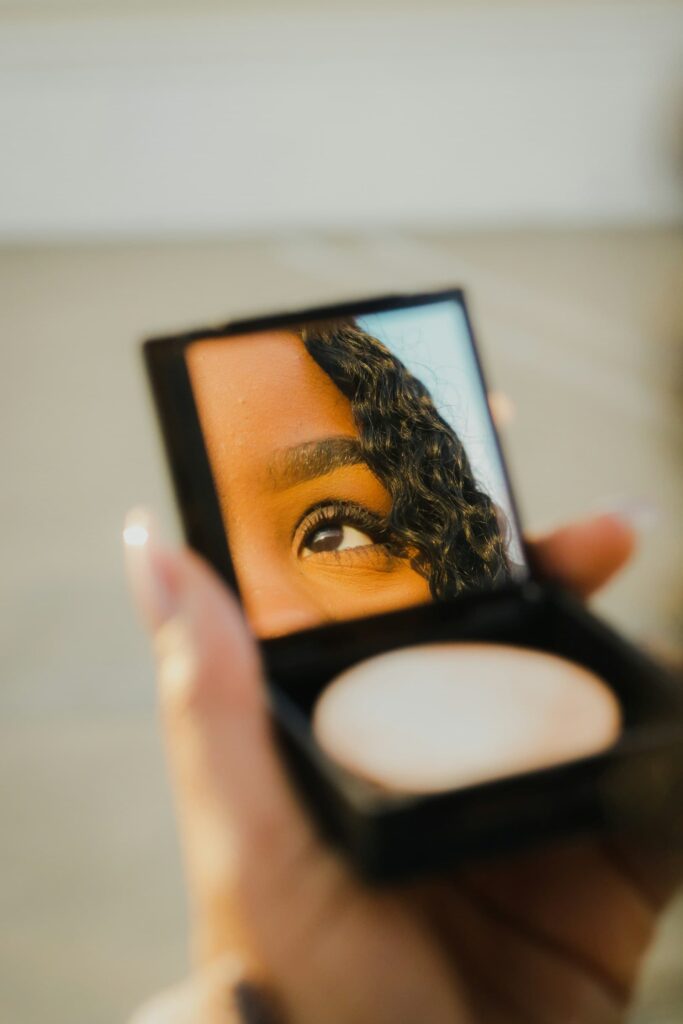
One of the more unexpected themes Aparna explores in her book is what she calls “ugly duckling privilege.”
She grew up with a mother who was widely considered very beautiful. Because of that, she says, beauty was never pinned on her in the same way.
She didn’t grow up being treated as “the pretty one,” and in hindsight she sees that as a kind of freedom: her value wasn’t constantly reflected back to her in terms of looks.
She uses this idea to invite women to examine the quiet ways family dynamics, comparison and societal beauty standards have shaped them. Especially when no one names it directly.
The truth:
- Your worth does not come from being seen as beautiful — it comes from who you are, not how you’re evaluated.
- Not being labeled “the beautiful one” isn’t a deficit — it can be a protection from being reduced to a single trait.
- You don’t have to center your confidence, relationships, or future around chasing beauty standards at all.
Lie #7: Only “finished” lives deserve to be written about

A lot of women in their 30s feel like they’re in the “messy middle” of their lives. Not starting out, not settled, still very much figuring things out.
Those years are rarely treated as worthy of memoir. Shewakramani deliberately pushes back on that idea.
While she sees plenty of stories about chaotic early 20s and reinvention in your 50s and 60s, she noticed a gap where women in their 30s should be.
Writing from this space means the book will always feel a little abrupt to some readers, because she’s still living it.
She even added an eleventh chapter right before the manuscript deadline because something new felt important.
If she could, she jokes she’d probably add a twelfth now. The story is evolving in real time.
The truth:
- You don’t need a neatly resolved story arc to have something worth saying.
- Your current season, whatever it looks like, is a valid place to speak from.
- Writing (or creating, or sharing) from the middle can help other women feel less alone in their own in-between.
Lie #8: Your role models live far away, on stages and pedestals

When asked who inspires her, Shewakramani doesn’t just point to public figures. One of her chapter lessons is ‘learn from the women before you’ and she takes it to heart.
She reflects on her great-grandmother, grandmother and mother. She considers the hardships they faced, the choices they made and the opportunities their sacrifices created for her.
If she’s wise, she says, she will not repeat their struggles at the same level but instead meet her own challenges, “on my terms and at a higher level.”
Her suggestion is clear: before we look to celebrity role models, we can look at the women in our own families and communities whose lives quietly made ours possible.
The truth:
- Generational stories can be powerful teachers if we take the time to learn them.
- You can honor what the women before you survived without feeling obligated to repeat it.
- Progress isn’t the absence of struggle. It’s having more choice than those before us in how you move through it.
The Truth Underneath It All: You’re Allowed to Like Yourself
If there’s one message Shewakramani hopes South Asian women, and women more broadly, take away from her story it’s this:
You are allowed to know what you deserve, believe you deserve it and wait for it.
Even if she didn’t agree with her TV edit, she appreciates that many viewers still saw a woman who refused to settle.
That is the thread she wants to keep amplifying through her book and any future appearances.
She wants women to feel permission to say, I have self-worth and I am going to stick to it. I’m going to like me and love me above all else. And that’s okay. In fact, I’m going to celebrate that.
Everything else – the labels, the edits, the opinions – are just noise around that core truth.
Listen to the Interview with Aparna Shewakramani
From her “polarizing” portrayal on Netflix’s hit TV show Indian Matchmaking, Aparna Shewakramani became an overnight ambassador for women demanding to be heard in their love lives, workplaces and in every space they occupy.
Aparna was born in London, lived in Dubai as a child, and called Texas her home for over 25 years before moving to NYC. She is an avid traveler (over 43 countries and counting) and the co-founder and owner of the luxury travel company My Golden Balloon.
Questions and topics we discuss in this episode include:
- The guilt that comes with giving up dating apps and how to cope
- The impact of irresponsible media consumption
- How to date from a place of clarity and grounding
- How to maintain hope in the world of dating
- Aparna’s hardest and easiest stories to tell in her new book
- What might still surprise you about Aparna beyond what you already know of her
Read: She’s Unlikeable and Other Lies That Bring Women Down
Connect with Aparna:
Instagram: @aparnashewakramani
Additional Resources: downloadables, guest book recommendations and listener deals
